Put an AI app builder inside your product in 5 minutes
Your users describe what they need. Your product builds it, hosts it and ships it — under your brand, on your domain. All it takes is the Totalum API.
No infrastructure · No AI pipeline to maintain · No DevOps
This is the builder you are embedding — running on the same API you will call.
We'll help you implement it — for free
Schedule a call and we'll walk you through the integration in your product, step by step.
Plus free credits to test it
Create it in only 4 steps
You do not have to understand how the builder works. You only have to point your coding agent at the docs.
What your users get behind your brand is a complete AI app builder: a real Next.js application with database, admin panel, auth, payments, hosting and a custom domain.
Create your API key
Create your Totalum account and generate a key. It is the only credential your product will ever need.
Send these docs to your AI agent
Add the key to your project, then give the whole Totalum API reference to the coding agent you already use.
Tell your coding agent what to build
Ask for an AI web app builder powered by the Totalum API, and say how it should fit your product.
“Using the attached Totalum API docs, add an AI app builder to our dashboard. Each project belongs to the logged-in workspace, and users can deploy from the chat.”
Ship it
Your agent wires it up and you are done — hosting, database, deploys and domains already handled.
Do not build the builder — start from ours
An entire AI app builder, open source on GitHub: chat, live preview, hosting and deploys, already wired to the Totalum API. Clone it, paste your API key, put your brand on it — and it is your product.
totalumlabs/ai-app-builder-open
It is just an HTTP API
No SDK to adopt, no runtime to install, no framework to migrate to. If your language can make an HTTP request, it can run an AI app builder.
Want a hand with the integration?
Tell us what you are building and we will tell you the shortest path to it — including the parts you should not build yourself.
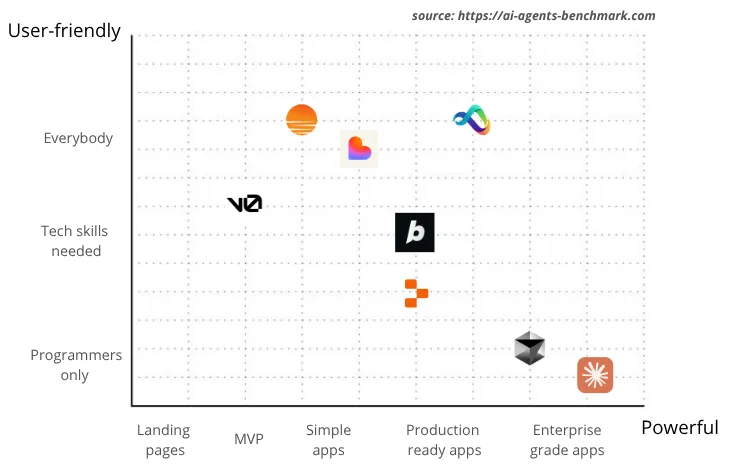
Totalum-generated websites outperform Lovable, Bolt and Replit
Independent benchmarks rank Totalum first for building real, usable software — the apps your product ships are the ones that win the comparison, not prototypes that need a rewrite.
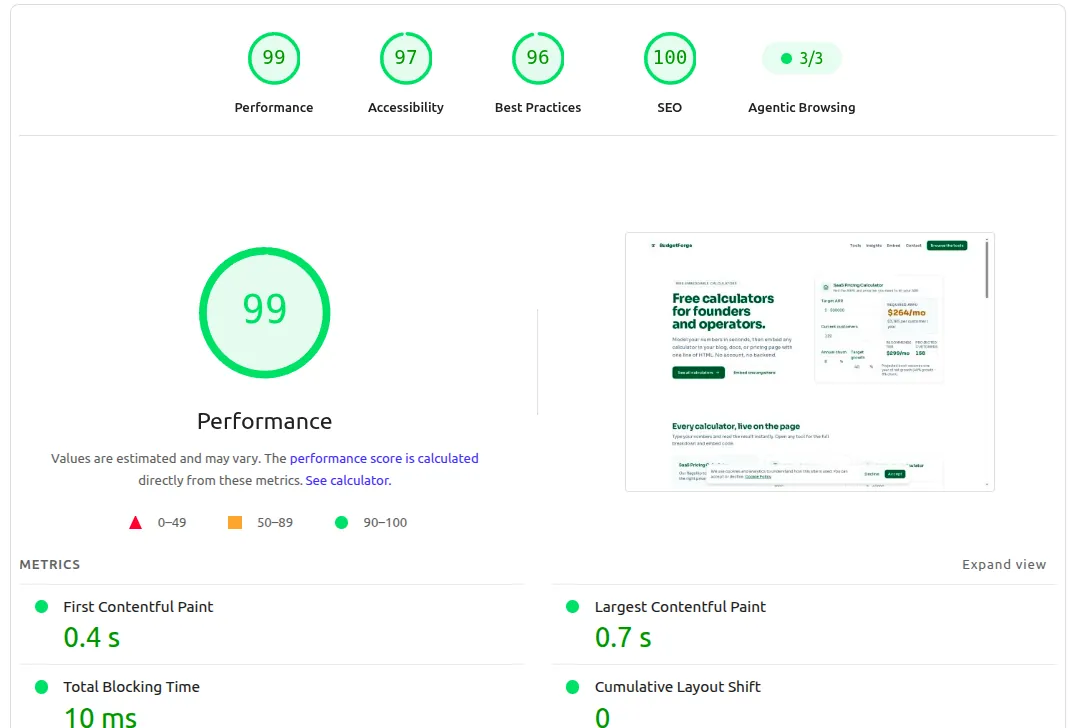
Websites built with Totalum score best on PageSpeed and SEO
Server-rendered Next.js on Cloudflare's edge, with clean metadata and structured data from the first version. Your users get the scores an SEO audit asks for — without buying a caching plugin or tuning a server.
What the API does for you
Everything below is what you would otherwise have to build, run and pay a team to keep alive. It is all managed under the hood.
…and everything else that usually takes a platform team — all managed under the hood.
The tech stack of every generated project
Not a toy export. Every project is a real application, on the stack your engineers would have picked anyway.
How the Totalum API works
You make one call and read the result. Everything inside the dashed box is ours to run — agents, testing, deploys, databases and domains.
Your product calls the API
Your user asks for something in your UI. Your backend forwards it with one HTTP request.
Frontier AI agents build it
A private sandbox spins up and frontier agents write the app together.
AI tests it in a browser
The agents open the app, click through it and fix what breaks — before your user sees it.
Published to Cloudflare
App and database deploy themselves, on the fastest and most scalable edge there is.
Your customer sees their app
The finished app appears in your product, under your brand, live on its own URL.
Wired into every generated project
Pay for what your users build
No seats, no platform fee, no minimum. The API is credit-based, and you decide what to charge your own customers on top.
What that covers
- Creating a project, running the agents and deploying it
- Databases, storage, email, AI calls and custom domains
- Reading data — projects, files, status, logs — is free
- Per-project monthly caps, so one project can't run away with your budget
- Live spend analytics per project, straight from the API
The exact cost of every operation is published in the API itself, so your integration can read prices instead of hard-coding them. See the docs
Questions, answered
Everything integrators ask us before they start — and the honest answer to each.
01How many projects can I create?
As many as you need — there is no cap. One account can hold millions of projects, so you can create one per customer, per team or per experiment and never think about limits again.
02Can I get support if I need it?
Yes. Write to contacto@totalum.app or book a call and you'll talk to the people who build Totalum, not a ticket queue. Integration reviews and architecture help are included while you're setting things up.
03Can a generated project use my customer's own domain?
Yes. Any project can be attached to any custom domain through the API — usually your customer's own. You stay in control of which domain belongs to which project.
04Can a generated project sync with my customer's GitHub?
Yes. Projects can be connected to a GitHub repository so the generated code is pushed to an account you or your customer own. The code is never locked inside Totalum.
05Can I add custom API keys to a project?
Yes. Every project has its own secrets, so you can inject the keys a specific customer needs — payments, CRMs, internal services — and the generated app will use them.
06Can I build a Lovable-style app builder with this?
That is exactly what the API is for. Chat UI, project list, live preview, deploys, domains — you design the product and the experience; Totalum does the building, hosting and infrastructure behind it.
07Do my users need a Totalum account?
No. Your users never see Totalum. Your backend holds one API key, and every project it creates belongs to your account, under your brand.
08What do the generated apps run on?
Next.js and React with BetterAuth, deployed to Cloudflare Workers with a Cloudflare D1 database. Your usual APIs and npm dependencies are supported — the agents install what the app needs.
09How fast is a project created?
A first working version typically takes a few minutes, and further changes are faster. Everything runs asynchronously, so your product can show progress while the agents work.
10How is it billed?
Credits, at $0.07 each. You buy credits on your account and spend them as your users generate. Most read operations — listing projects, reading files, checking status — are free.
11What happens if I stop using Totalum?
You keep the code. Projects can be exported or pushed to GitHub at any time, so nothing you have shipped to a customer depends on you staying.
Your product could build apps by tonight
Grab a key, paste the docs into your agent, and let it wire the builder into the product you already have.